Santorini is a volcanic island in the Aegean Sea, part of the Cyclades archipelago and one of the most historically rich destinations in the Mediterranean. Human presence on the island dates back as far as 14,000 BC, when a small Neolithic settlement first took root on its volcanic plateau. The name Santorini itself derives from Saint Irene, whose church still stands in the island’s only surviving medieval town.
The Eruption That Shaped an Island
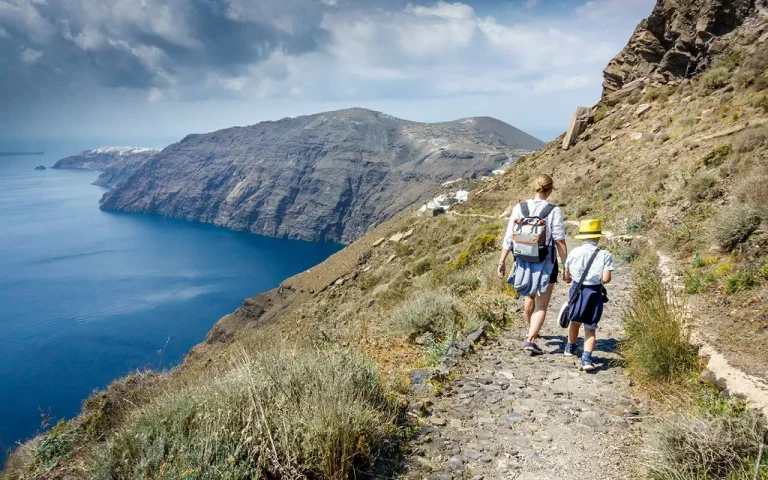
No event has defined Santorini more profoundly than the catastrophic volcanic eruption of around 1620–1600 BC — one of the largest in recorded human history. The explosion sent ash soaring high into the atmosphere and buried the island’s surface under a thick layer of pumice, dramatically reshaping its coastline and altering the entire eastern Mediterranean. The eruption is widely believed to have dealt a fatal blow to the flourishing Minoan civilisation, and its effects were felt across the ancient world. What remains today — the iconic crescent shape, the towering caldera cliffs, the deep volcanic waters — is the direct legacy of that ancient cataclysm. The volcano has remained active throughout history, with significant eruptions recorded in subsequent centuries, serving as a constant reminder that this is a living, breathing landscape unlike any other.
The island was eventually abandoned in the aftermath, with inhabitants seeking refuge on neighbouring Crete. It was not until the mid-17th century AD that people returned to resettle and rebuild, giving rise to the communities whose descendants still call Santorini home today.
Museums in Santorini
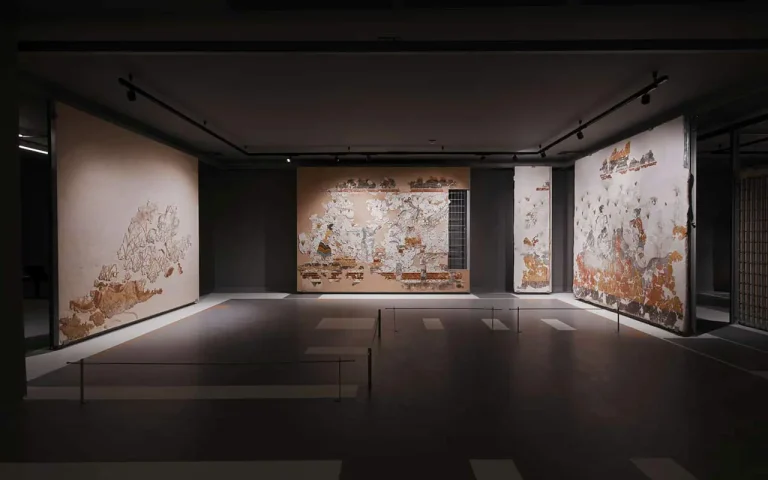
Beyond its famous views and architecture, Santorini is home to a surprisingly rich museum culture that rewards curious visitors with a deeper understanding of the island’s layered past. With around two million visitors arriving each year, the island has developed an impressive range of cultural institutions. The Archaeological Museum and the Museum of Prehistoric Thera offer fascinating windows into the island’s ancient civilisations, while the Folklore Museum brings to life the traditions and daily rhythms of more recent centuries. For something more specialist, the Naval Maritime Museum in Oia traces the island’s seafaring heritage, the Minerals and Fossils Museum explores its extraordinary geological story, and the Wine Museum — fittingly — celebrates Santorini’s ancient and continuing winemaking tradition.